


The short version, for the tired and the skimming: an overtired baby isn’t being difficult. Their body dumped a stress hormone that makes sleep physically harder. Catch them a little earlier, and the whole problem mostly disappears. ✶
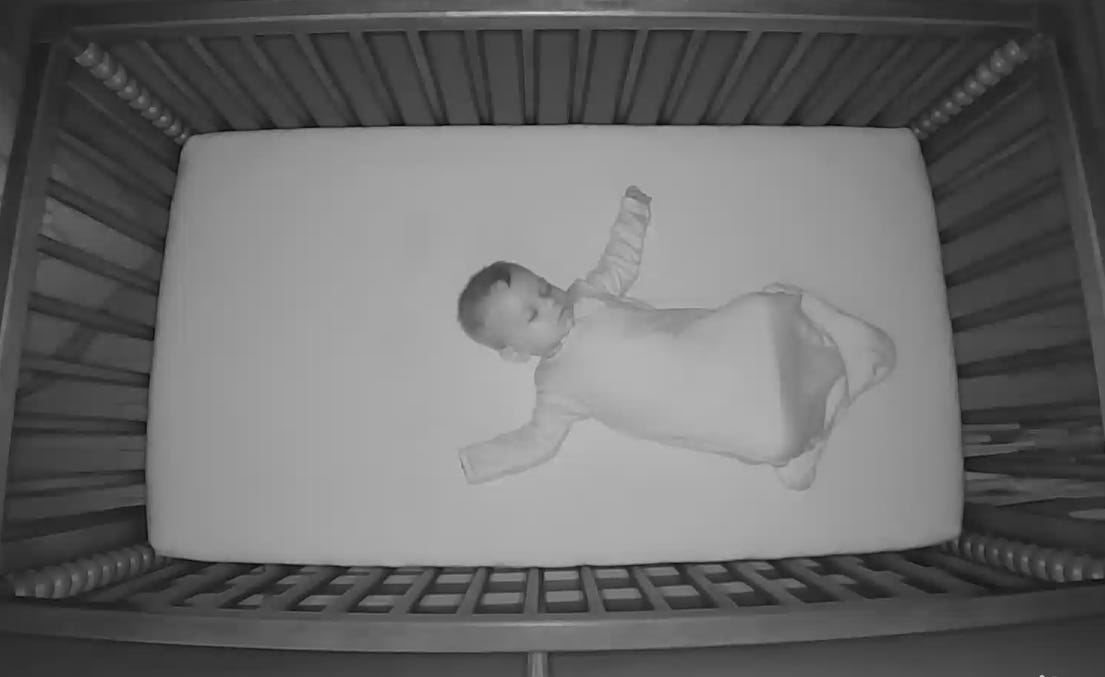
Let me start with the advice that ruins more nights than almost anything else: “just keep them up longer and they’ll crash.” It makes sense — it’s how it works for us. Stay up too late, fall into bed, sleep like the dead. So surely an extra-tired baby sleeps harder, right?
Nope. The opposite. And once you get why, a whole lot of maddening baby behavior suddenly clicks.
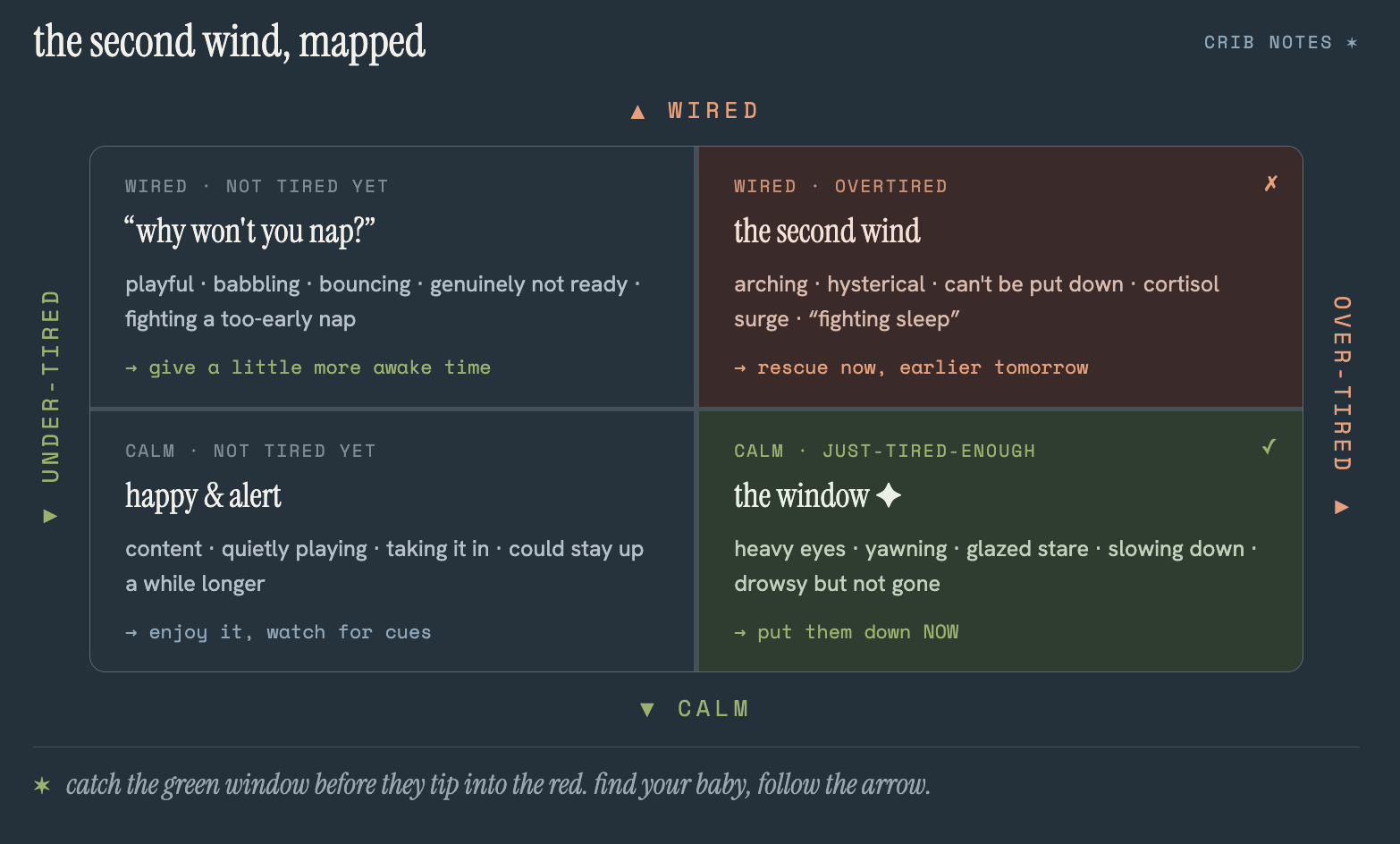
The more tired they get, the more wired they get
Here’s the scene. Your baby is clearly tired, so you think “great, almost bedtime, let me just finish this one thing.” Thirty minutes go by. And now they’re worse: hysterical, arching, wide awake at the exact moment they should be drifting off.
It looks like your baby is fighting sleep. They’re not. What you’re watching is biology.
And listen, biology was not my thing in school. But there’s only one science word in this whole post, and here it is: cortisol.
When a baby stays awake past the point their body wanted to sleep, it releases cortisol, a stress-and-alertness hormone. Think of it like a second wind. You know when you’re so exhausted you blow past tired and get weirdly buzzy and can’t fall asleep? That’s you on cortisol. Babies do the same thing, they just can’t say “I’m too wired to sleep,” they can only scream it.
So here’s the whole trap: past a certain point, more tired doesn’t mean more sleepy. It means more wired. That “fighting sleep” baby isn’t fighting you, and it isn’t a bad habit. It’s a tiny body flooded with the one hormone guaranteed to keep it awake. It’s not behavioral, it’s chemical. They can’t help it.
How to stay ahead of it
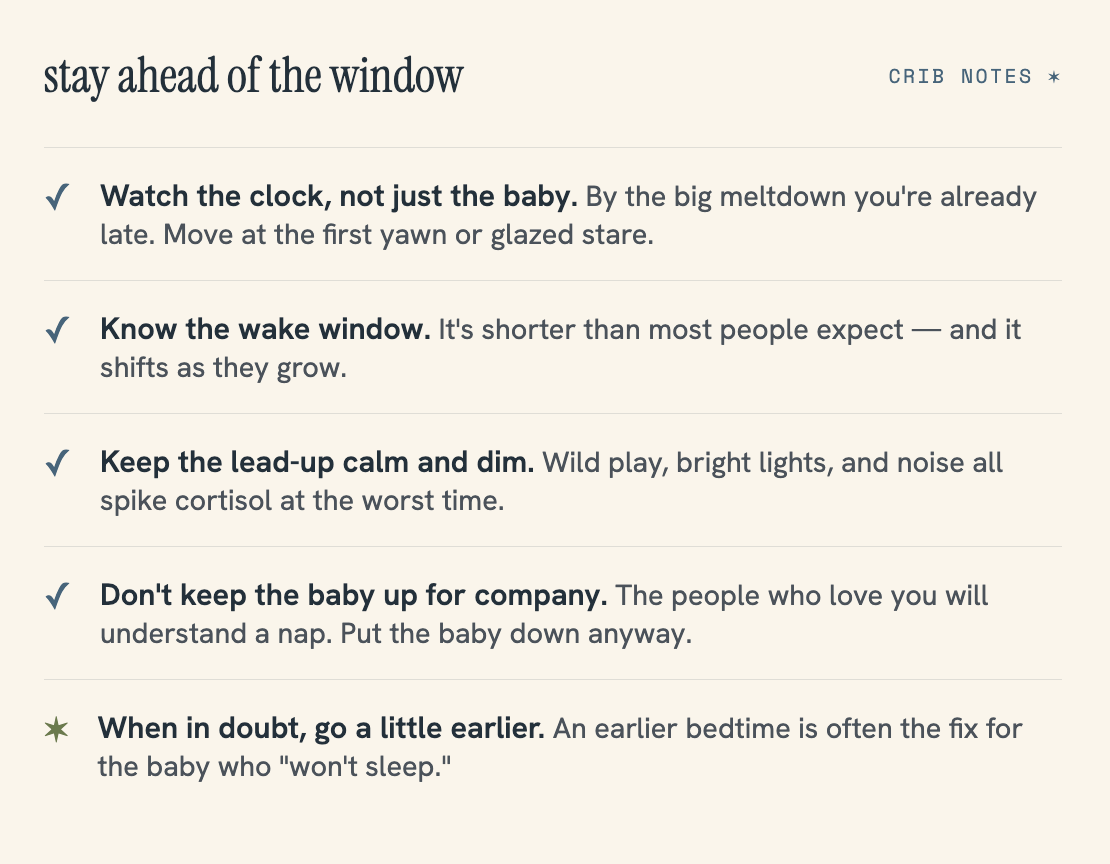
The fix isn’t to wear your baby out. It’s to get them down before the cortisol shows up:
But what if you’re already there?
Baby’s past the point, fully melting down, cortisol in full swing. You can’t reason with it and you can’t “train” your way out of it. Your only job now is to bring the stimulation way down and help their nervous system come back to earth. Calm regulates calm.
Go dark and quiet, fast. Cut the lights and the noise. Get into the sleep space.
Hold them close, skin-to-skin if you can. Your heartbeat and warmth are genuinely regulating.
Stack the soothers: sound machine, gentle rhythmic motion, swaddle, the suck (paci or feed). Start by matching their intensity, then slowly dial it down. Going still too fast can backfire.
Calm your own body too. Babies co-regulate off you. Slow breaths, low voice, drop your shoulders. You being the anchor is part of the fix.
And then let it go. Soothing an overtired baby however you need to is a rescue, not a training moment. It doesn’t “undo” anything. Sometimes they just have to burn off the cortisol crying in your arms, and you holding them through it is the help. Get them down, aim earlier tomorrow, zero guilt.
The one reframe to keep
Next time it looks like your baby is fighting sleep, swap the question. Not “why are you resisting?” but “did I miss the window?”
Almost every time, that’s the answer. Not a stubborn baby, just timing. And timing, you can fix.
Want help finding your baby’s windows?
Wake windows and timing are personal, and they change fast, exactly the kind of thing I help families nail down. The first step is easy and free: fill out my quick intake form and tell me about your little one.
For more honest, un-scary sleep science, subscribe. Lots more where this came from.
I’m a certified pediatric sleep consultant, and I provide sleep coaching and education, not medical advice. I’ll always tell you when something belongs with your pediatrician. Your child’s doctor is always your first call for any medical concern.
the reference version of this, with the signs to catch early, is on the blog: overtired baby signs.